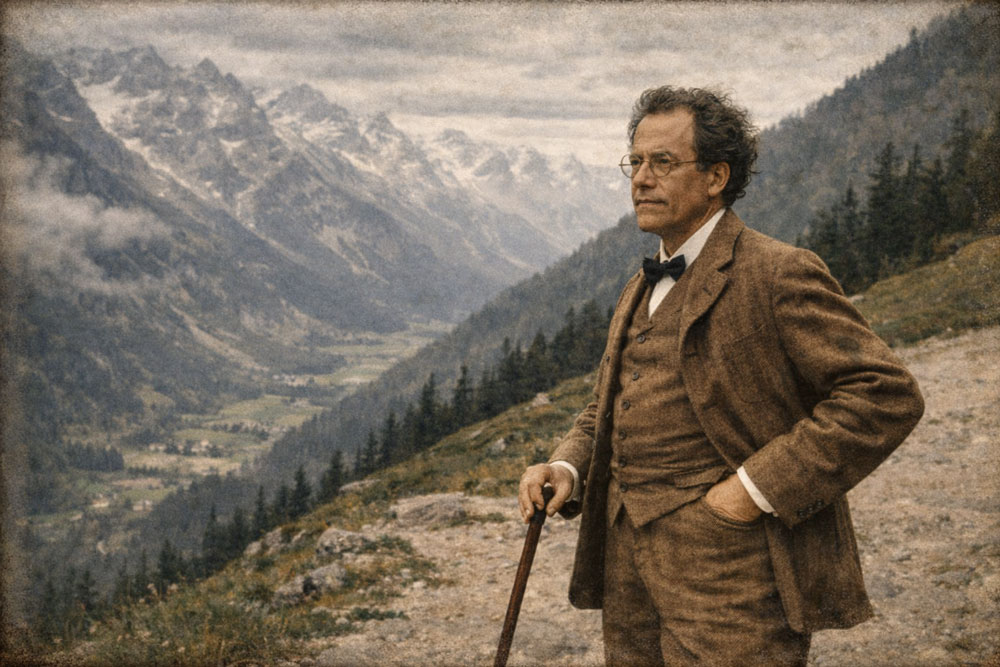
A Cinematic Prelude: Coffee, Cigarettes, and Transcendence
My journey into the sound world of Gustav Mahler(1)
began in the most unlikely of places: the grainy, monochrome world of
a Jim Jarmusch(2) film. While
watching Coffee and Cigarettes, I found myself drifting through
its series of minimalist vignettes scenes where the simple act of
smoking and drinking coffee becomes a backdrop for human connection
and existential wandering. In the final episode, titled "Champagne,"
the atmosphere shifts from quirky to profoundly meditative. Two men
sit in a quiet, industrial space, sipping cold coffee from paper cups
and pretending it is the finest vintage champagne. As the dialogue
fades into a comfortable silence, the air is filled with the ethereal
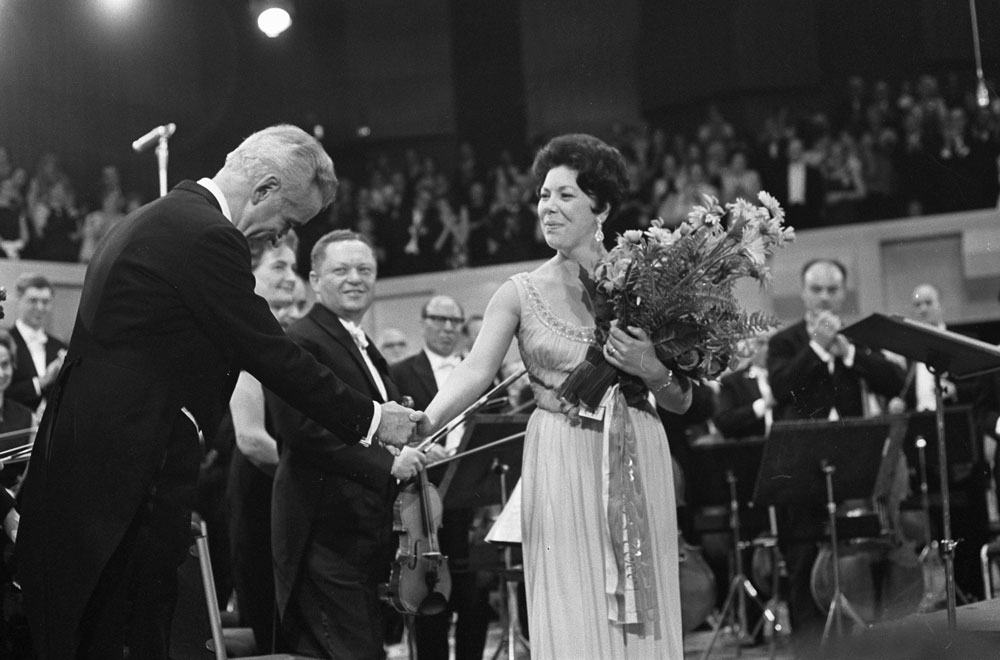
voice of Janet Baker(3) singing
Mahler’s "Ich bin der Welt abhanden gekommen."
The title translates to "I have lost track of the world," and as I
listened, I felt the song’s mysterious pull. The lyrics, based on a
poem by Friedrich Rückert(4),
aren't about death in a morbid sense, but rather about a peaceful,
deliberate withdrawal from the chaos of modern life. The poet tells
us: "I am dead to the world's tumult, and I rest in a quiet realm." It
is essentially an "introvert’s anthem." Mahler’s music reflects this
by being incredibly still and transparent; it doesn't shout for
attention. Instead, it invites you into a private sanctuary where the
"world" can no longer reach you. The song concludes by saying they
live alone in their "heaven," their "love," and their "song." In that
moment, watching those two men on screen find a brief escape from
reality, I realized that Mahler wasn't just a composer of grand music,
he was a poet of the inner soul. This was the spark that made me need
to know more.
Reading the Score: Nature, Grief, and the Romantic Soul
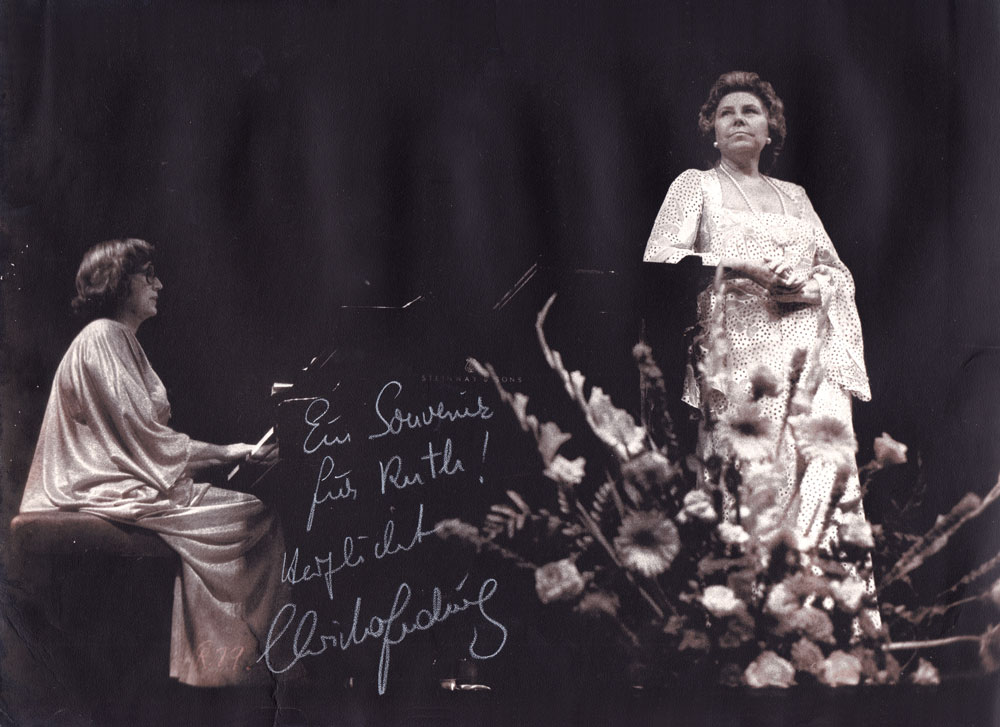
To understand the man behind the music, I listened to the iconic EMI
Classics(5) music album with
heavenly voice of Christa Ludwig’s(6)
and read the book "Mahler Symphonies and Songs" by Philip Barford(7)
, where Mahler Songs truly came to life. I discovered then Mahler as a
composer who was a lifelong outsider, a Jew in a Christian world, a
Bohemian in Vienna, searching for identity through the vast, spiritual
power of the Austrian Alps. Barford explains that Mahler’s music
reflects his worldview, a mix of beautiful nature and the harsh,
everyday realities of lifebird-calls and military marches, folk dances
and existential dread.
Part I: Lieder eines fahrenden Gesellen (Songs of a Wanderer)
In this part, Mahler tells the story of a wandering apprentice trying
to outrun a broken heart. In "Wenn Mein Schatz Hochzeit Macht" (When
My Sweetheart Has Her Wedding-day), the storytelling is built on a
cruel irony. While his beloved celebrates her "joyous wedding," the
protagonist retreats to a "dark little room" to weep. Mahler contrasts
this inner mourning with the chirping of a "sweet little bird" on the
green heath, emphasizing nature’s beautiful indifference to human
pain. This leads into "Ging Heut' Morgen übers Feld" (I Walked Across
the Fields This Morning), a song that begins with a sparkling,
folk-like joy. The world glitters with dew and sunshine; the bluebells
ring out a morning greeting. It feels like a triumph of the spirit
until the very final lines: the wanderer asks if his happiness is also
beginning, only for the music to collapse as he realizes that for him,
such joy can "never bloom again."
Part II: Kindertotenlieder (Songs on the Death of Children)
The mood shifts from the heartbreak of young wanderer to the ultimate
tragedy of parenthood in the Kindertotenlieder. In "Nun Seh'
Ich Wohl, Warum So Dunkle Flammen" (Now I See Well Why Such Dark
Flames), the father looks back at the "dark flames" in his children’s
eyes. Through Mahler's shimmering, delicate orchestration, we realize
that those eyes weren't just gazes, but "stars" destined to return to
the source of all light. It is a hauntingly beautiful metaphor for
foresight and fate. This stillness is shattered by the final song, "In
Diesem Wetter, In Diesem Braus" (In This Weather, In This Raging
Storm). Here, the music is agitated and fearful, mimicking a literal
and psychological thunderstorm. The father cries out that he should
never have let the children out in such a gale, a heartbreaking
metaphor for their death. Yet, the storm eventually breaks, and the
song ends in a hollow, lullaby-like peace: the children are no longer
frightened by any storm, resting safely as if in "their mother’s
house."
The Living Archive: Playing with Mahler’s Legacy
While Mahler’s symphonies are massive, complex cathedrals of sound,
his songs offer a much more intimate, naked window into his soul.
There is a specific magic in how he could condense an entire world of
emotion into just a few minutes of music. I felt this during a visit
to the Jewish Museum in Berlin(8).
German museum are masters of "living history", it is never just about
looking at objects behind glass; it is about playing, clicking, and
experiencing. I found myself at an interactive listening station that
invited me to navigate through Mahler’s life through dates and sounds.
Accidentally, with a simple tap, I chose "Ich ging mit Lust durch
einen grünen Wald (I walked with joy through a green forest)."
The vibe of this song is a world away from the dark thunderstorms of
the Kindertotenlieder. As the music began, I was transported to a
lush, sun-drenched forest. The song is a folk-inspired tale of a young
man wandering through the woods to find his sweetheart. It has a
gentle, swaying rhythm that mimics the act of walking, filled with a
sense of peacefulness and pure adoration for nature. What makes this
song so special is its naive beauty; it belongs to Mahler’s earlier
works, where he captured the rustic, magical spirit of German folk
tales before the heavier burdens of his later life took hold. Sitting
there in the heart of Berlin, playing with the interface and letting
the gentle fragrance of the music wash over me, I realized that
Mahler’s genius wasn't just in his grand scale, but in his ability to
make a single walk through the woods feel like a spiritual journey.
Mahler via the Accordion: Elisabeth Kulman’s Velvet Revolution
After immersing myself in the traditional, grand performances of
Mahler I stumbled upon something that shifted my perspective. My
exploration led me to a brilliant, unconventional recording by the
Austrian singer Elisabeth Kulman(9)
and the ensemble Amarcord Wien. Their 2009 album, "Mahler – Lieder",
is a landmark of modern interpretation that dares to step away from
the massive orchestral tradition. Hearing these songs reimagined in
such a creative way was deeply touching; it felt as though the music
had been stripped of its heavy armor, allowing the melodies to breathe
with a newfound, raw vulnerability.
The magic of this album lies in its way of instrumentation. Instead of
a full symphony, the songs are arranged for a chamber ensemble of just
four instruments: violin, cello, double bass, and, most strikingly,
the accordion. This choice is a stroke of genius, as it highlights the
folk-like, street music roots that Mahler often hid within his complex
scores. The texture is so transparent that you can hear the very
breath of the performers, making it feel less like a public spectacle
and more like a private conversation.
At the center of it all is Kulman herself, a self-described "rebel" of
the classical world who famously walked away from the rigid opera
industry at the peak of her career to pursue her own artistic truth.
Her velvety, dark mezzo-soprano voice brings a charismatic realism to
the songs, avoiding the drama of a typical opera star for a sense of
honest, human intimacy. It is no wonder this daring departure from
tradition won both the "Pasticcio Prize"(10)
and the International Record Prize "Toblacher Komponierhäuschen.(11)" For me, it was the final piece of the puzzle: a reminder that
Mahler’s soul is just as powerful in a quiet, accordion-led whisper as
it is in a thunderous symphonic roar.
Footnotes
(1) Gustav Mahler: A late-Romantic
Austrian composer and conductor who acted as a bridge between the
19th-century Austro-German tradition and the modernism of the early
20th century. He is best known for his ten massive symphonies and his
emotionally deep song cycles.
go back
(2) Jim Jarmusch: An iconic
American independent filmmaker known for his minimalist, atmospheric
"cool" style. His films, like Coffee and Cigarettes, often focus on
mood, dialogue, and music rather than traditional action.
go back
(3) Janet Baker: A world-renowned
English mezzo-soprano celebrated for her deep emotional communication
and clarity. Her recordings of Mahler are considered among the
greatest in history for their sincerity and poise.
go back
(4) Friedrich Rückert: A German
poet and translator whose verses Mahler set to music in the
Rückert-Lieder and Kindertotenlieder. His poetry often explores themes
of love, nature, and the quiet withdrawal into one’s own soul.
go back
(5) EMI Classics: A historic
British record label that was home to many of the world's most famous
classical musicians. It produced several of the definitive Mahler
recordings mentioned in this post.
go back
(6) Christa Ludwig: One of the most
significant mezzo-sopranos of the 20th century, famous for her rich,
seamless voice. Her interpretations of Mahler’s songs are legendary
for their warmth and technical perfection.go back
(7) Philip Barford: A musicologist
and author known for his analytical yet accessible writing on Mahler.
His book Mahler Symphonies and Songs is a staple for those looking to
understand the structure and meaning behind the music.
go back
(8)
Jewish Museum in Berlin: One of the largest Jewish Museums in Europe,
housed in a striking building designed by Daniel Libeskind. It uses
innovative, interactive exhibits to tell the 2,000-year history of
Jews in Germany.
go back
(9)
Elisabeth Kulman: An acclaimed Austrian mezzo-soprano who transitioned
from soprano roles to become a leading voice in classical music. She
is known for her artistic independence and her "Revolution" projects
that challenge the traditions of the opera world.
go back
(10) Pasticcio Prize: A
prestigious Austrian music award presented by the radio station Ö1. It
recognizes excellence in recordings that show particular creativity,
quality, and spirit.
go back
(11) Toblacher Komponierhäuschen:
An international record prize named after the "composing hut" in
Toblach where Mahler wrote some of his greatest works. It is awarded
annually to the best recordings of Mahler's music.
go back